• X Shop
  • Checkout

X-REP.COM

Dedicated to Your Physical Transformation

  • Home
  • About Us
  • X Shop
  • X Files
    • Latest Articles
    • FAQ
    • Ezine Archive
  • Testimonials
  • Contact Us
  • Gallery
  • Subscribe

Moment of Bodybuilding Zen 207: Arnold’s Comeback Mass

Arnold at the 1980 Mr. Olympia, outside in the sun

Many thought Arnold should not have won the 1980 Mr. Olympia in Australia because he wasn’t at his best. Here’s his condition—and face as he realizes kangaroo dung does not smell like a scented candle… [Read more…]

Filed Under: X Files Tagged With: 1980 Mr. Olympia, arnold, arnold schwarzenegger, bodybuilding zen, ideal exercises, speed sets, stretch loading

Mass Jolt: Rep-Speed Revolt

Jay Cutler looking huge in the gym with hands on hips

Throughout my training career, it’s always bothered me that so many top bodybuilders talk about the importance of slow rep speed—especially on the negative or lowering stroke, yet most don’t follow that protocol… [Read more…]

Filed Under: X Files Tagged With: Brad Schoenfeld, Charles Poliquin, Jay Cutler, mike mentzer, rep speed, ronnie coleman, size jolt, slow negatives, slow reps, speed reps, speed sets

Jay Cutler’s Biceps Mass “Secret”

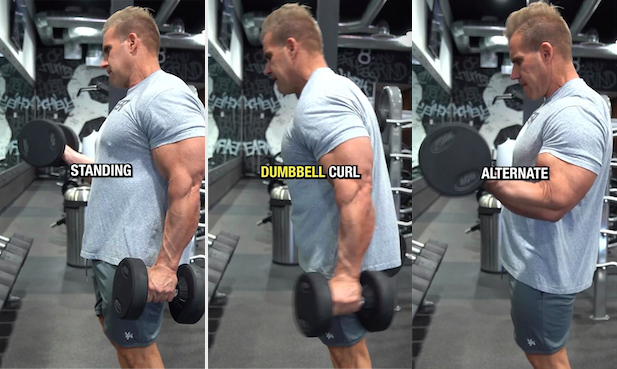
Jay Cutler demonstrating alternate dumbbell curls

I’ve always enjoyed watching the top bodybuilders train. It’s always motivational, and I often discover ways that they’ve gotten huge through instinctively doing the right thing… [Read more…]

Filed Under: X Files Tagged With: arm mass, arm size, arm workout, arnold, arnold schwarzenegger, big arms, Jay Cutler, speed sets

Moment of Bodybuilding Zen 200: Arnold’s Shirtless Office Mass
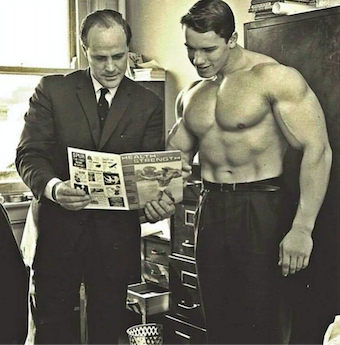
Arnold shirtless in an office

In his younger days, Arnold had trouble holding an office job due to his disdain for shirts—and sometimes pants. [Read more…]

Filed Under: X Files Tagged With: arnold, arnold schwarzenegger, bodybuilding zen, myotatic reflex, speed reps, speed sets

Speed Sets Pack On Mass (my experiment)

Steve's arm in a T-shirt

To recap last week’s newsletters, with Speed Sets—1.5-second reps, you’re involving more fast-twitch fibers along with slow-twitch on the early reps…

More than you do with a normal, slower rep speed… [Read more…]

Filed Under: X Files Tagged With: fast-twitch, slow reps, slow-twitch, speed reps, speed sets, training experiments, vascularity

The Size Principle and Speed Sets

Steve spotting Jonathan on incline dumbbell presses

The Size Principle of Muscle Fiber Recruitment tells us that on a standard-tempo set of lifting in one second and lowering in three, the slow-twitch fibers dominate on the earlier, easier reps of a set… [Read more…]

Filed Under: X Files Tagged With: Chad Waterbury, fiber recruitment, size principle, size principle of muscle fiber recruitment, speed sets

The Need for Speed: Your Get-Bigger Trigger

Arnold doing bent-over barbell rows
LnRiLWJ1dHRvbntjb2xvcjojZjFmMWYxfS50Yi1idXR0b24tLWxlZnR7dGV4dC1hbGlnbjpsZWZ0fS50Yi1idXR0b24tLWNlbnRlcnt0ZXh0LWFsaWduOmNlbnRlcn0udGItYnV0dG9uLS1yaWdodHt0ZXh0LWFsaWduOnJpZ2h0fS50Yi1idXR0b25fX2xpbmt7Y29sb3I6aW5oZXJpdDtjdXJzb3I6cG9pbnRlcjtkaXNwbGF5OmlubGluZS1ibG9jaztsaW5lLWhlaWdodDoxMDAlO3RleHQtZGVjb3JhdGlvbjpub25lICFpbXBvcnRhbnQ7dGV4dC1hbGlnbjpjZW50ZXI7dHJhbnNpdGlvbjphbGwgMC4zcyBlYXNlfS50Yi1idXR0b25fX2xpbms6aG92ZXIsLnRiLWJ1dHRvbl9fbGluazpmb2N1cywudGItYnV0dG9uX19saW5rOnZpc2l0ZWR7Y29sb3I6aW5oZXJpdH0udGItYnV0dG9uX19saW5rOmhvdmVyIC50Yi1idXR0b25fX2NvbnRlbnQsLnRiLWJ1dHRvbl9fbGluazpmb2N1cyAudGItYnV0dG9uX19jb250ZW50LC50Yi1idXR0b25fX2xpbms6dmlzaXRlZCAudGItYnV0dG9uX19jb250ZW50e2ZvbnQtZmFtaWx5OmluaGVyaXQ7Zm9udC1zdHlsZTppbmhlcml0O2ZvbnQtd2VpZ2h0OmluaGVyaXQ7bGV0dGVyLXNwYWNpbmc6aW5oZXJpdDt0ZXh0LWRlY29yYXRpb246aW5oZXJpdDt0ZXh0LXNoYWRvdzppbmhlcml0O3RleHQtdHJhbnNmb3JtOmluaGVyaXR9LnRiLWJ1dHRvbl9fY29udGVudHt2ZXJ0aWNhbC1hbGlnbjptaWRkbGU7dHJhbnNpdGlvbjphbGwgMC4zcyBlYXNlfS50Yi1idXR0b25fX2ljb257dHJhbnNpdGlvbjphbGwgMC4zcyBlYXNlO2Rpc3BsYXk6aW5saW5lLWJsb2NrO3ZlcnRpY2FsLWFsaWduOm1pZGRsZTtmb250LXN0eWxlOm5vcm1hbCAhaW1wb3J0YW50fS50Yi1idXR0b25fX2ljb246OmJlZm9yZXtjb250ZW50OmF0dHIoZGF0YS1mb250LWNvZGUpO2ZvbnQtd2VpZ2h0Om5vcm1hbCAhaW1wb3J0YW50fS50Yi1idXR0b25fX2xpbmt7YmFja2dyb3VuZC1jb2xvcjojNDQ0O2JvcmRlci1yYWRpdXM6MC4zZW07Zm9udC1zaXplOjEuM2VtO21hcmdpbi1ib3R0b206MC43NmVtO3BhZGRpbmc6MC41NWVtIDEuNWVtIDAuNTVlbX0gLnRiLWJ1dHRvbltkYXRhLXRvb2xzZXQtYmxvY2tzLWJ1dHRvbj0iOTFmYTVlMDI1YWNiOTQ1MTRiZjM3YTc4ZjdhNDFhZDkiXSB7IHRleHQtYWxpZ246IGNlbnRlcjsgfSAudGItYnV0dG9uW2RhdGEtdG9vbHNldC1ibG9ja3MtYnV0dG9uPSI5MWZhNWUwMjVhY2I5NDUxNGJmMzdhNzhmN2E0MWFkOSJdIC50Yi1idXR0b25fX2xpbmsgeyBiYWNrZ3JvdW5kLWNvbG9yOiByZ2JhKCA5LCA5MCwgMTM4LCAxICk7Y29sb3I6IHJnYmEoIDI1NSwgMjU1LCAyNTUsIDEgKTtib3gtc2hhZG93OiA1cHggNXB4IDEwcHggMCByZ2JhKCAwLCAwLCAwLCAwLjUgKTtmb250LXdlaWdodDogYm9sZDtjb2xvcjogcmdiYSggMjU1LCAyNTUsIDI1NSwgMSApOyB9IC50Yi1idXR0b25bZGF0YS10b29sc2V0LWJsb2Nrcy1idXR0b249IjkxZmE1ZTAyNWFjYjk0NTE0YmYzN2E3OGY3YTQxYWQ5Il0gLnRiLWJ1dHRvbl9faWNvbiB7IGZvbnQtZmFtaWx5OiBkYXNoaWNvbnM7IH0gQG1lZGlhIG9ubHkgc2NyZWVuIGFuZCAobWF4LXdpZHRoOiA3ODFweCkgeyAudGItYnV0dG9ue2NvbG9yOiNmMWYxZjF9LnRiLWJ1dHRvbi0tbGVmdHt0ZXh0LWFsaWduOmxlZnR9LnRiLWJ1dHRvbi0tY2VudGVye3RleHQtYWxpZ246Y2VudGVyfS50Yi1idXR0b24tLXJpZ2h0e3RleHQtYWxpZ246cmlnaHR9LnRiLWJ1dHRvbl9fbGlua3tjb2xvcjppbmhlcml0O2N1cnNvcjpwb2ludGVyO2Rpc3BsYXk6aW5saW5lLWJsb2NrO2xpbmUtaGVpZ2h0OjEwMCU7dGV4dC1kZWNvcmF0aW9uOm5vbmUgIWltcG9ydGFudDt0ZXh0LWFsaWduOmNlbnRlcjt0cmFuc2l0aW9uOmFsbCAwLjNzIGVhc2V9LnRiLWJ1dHRvbl9fbGluazpob3ZlciwudGItYnV0dG9uX19saW5rOmZvY3VzLC50Yi1idXR0b25fX2xpbms6dmlzaXRlZHtjb2xvcjppbmhlcml0fS50Yi1idXR0b25fX2xpbms6aG92ZXIgLnRiLWJ1dHRvbl9fY29udGVudCwudGItYnV0dG9uX19saW5rOmZvY3VzIC50Yi1idXR0b25fX2NvbnRlbnQsLnRiLWJ1dHRvbl9fbGluazp2aXNpdGVkIC50Yi1idXR0b25fX2NvbnRlbnR7Zm9udC1mYW1pbHk6aW5oZXJpdDtmb250LXN0eWxlOmluaGVyaXQ7Zm9udC13ZWlnaHQ6aW5oZXJpdDtsZXR0ZXItc3BhY2luZzppbmhlcml0O3RleHQtZGVjb3JhdGlvbjppbmhlcml0O3RleHQtc2hhZG93OmluaGVyaXQ7dGV4dC10cmFuc2Zvcm06aW5oZXJpdH0udGItYnV0dG9uX19jb250ZW50e3ZlcnRpY2FsLWFsaWduOm1pZGRsZTt0cmFuc2l0aW9uOmFsbCAwLjNzIGVhc2V9LnRiLWJ1dHRvbl9faWNvbnt0cmFuc2l0aW9uOmFsbCAwLjNzIGVhc2U7ZGlzcGxheTppbmxpbmUtYmxvY2s7dmVydGljYWwtYWxpZ246bWlkZGxlO2ZvbnQtc3R5bGU6bm9ybWFsICFpbXBvcnRhbnR9LnRiLWJ1dHRvbl9faWNvbjo6YmVmb3Jle2NvbnRlbnQ6YXR0cihkYXRhLWZvbnQtY29kZSk7Zm9udC13ZWlnaHQ6bm9ybWFsICFpbXBvcnRhbnR9LnRiLWJ1dHRvbl9fbGlua3tiYWNrZ3JvdW5kLWNvbG9yOiM0NDQ7Ym9yZGVyLXJhZGl1czowLjNlbTtmb250LXNpemU6MS4zZW07bWFyZ2luLWJvdHRvbTowLjc2ZW07cGFkZGluZzowLjU1ZW0gMS41ZW0gMC41NWVtfSB9IEBtZWRpYSBvbmx5IHNjcmVlbiBhbmQgKG1heC13aWR0aDogNTk5cHgpIHsgLnRiLWJ1dHRvbntjb2xvcjojZjFmMWYxfS50Yi1idXR0b24tLWxlZnR7dGV4dC1hbGlnbjpsZWZ0fS50Yi1idXR0b24tLWNlbnRlcnt0ZXh0LWFsaWduOmNlbnRlcn0udGItYnV0dG9uLS1yaWdodHt0ZXh0LWFsaWduOnJpZ2h0fS50Yi1idXR0b25fX2xpbmt7Y29sb3I6aW5oZXJpdDtjdXJzb3I6cG9pbnRlcjtkaXNwbGF5OmlubGluZS1ibG9jaztsaW5lLWhlaWdodDoxMDAlO3RleHQtZGVjb3JhdGlvbjpub25lICFpbXBvcnRhbnQ7dGV4dC1hbGlnbjpjZW50ZXI7dHJhbnNpdGlvbjphbGwgMC4zcyBlYXNlfS50Yi1idXR0b25fX2xpbms6aG92ZXIsLnRiLWJ1dHRvbl9fbGluazpmb2N1cywudGItYnV0dG9uX19saW5rOnZpc2l0ZWR7Y29sb3I6aW5oZXJpdH0udGItYnV0dG9uX19saW5rOmhvdmVyIC50Yi1idXR0b25fX2NvbnRlbnQsLnRiLWJ1dHRvbl9fbGluazpmb2N1cyAudGItYnV0dG9uX19jb250ZW50LC50Yi1idXR0b25fX2xpbms6dmlzaXRlZCAudGItYnV0dG9uX19jb250ZW50e2ZvbnQtZmFtaWx5OmluaGVyaXQ7Zm9udC1zdHlsZTppbmhlcml0O2ZvbnQtd2VpZ2h0OmluaGVyaXQ7bGV0dGVyLXNwYWNpbmc6aW5oZXJpdDt0ZXh0LWRlY29yYXRpb246aW5oZXJpdDt0ZXh0LXNoYWRvdzppbmhlcml0O3RleHQtdHJhbnNmb3JtOmluaGVyaXR9LnRiLWJ1dHRvbl9fY29udGVudHt2ZXJ0aWNhbC1hbGlnbjptaWRkbGU7dHJhbnNpdGlvbjphbGwgMC4zcyBlYXNlfS50Yi1idXR0b25fX2ljb257dHJhbnNpdGlvbjphbGwgMC4zcyBlYXNlO2Rpc3BsYXk6aW5saW5lLWJsb2NrO3ZlcnRpY2FsLWFsaWduOm1pZGRsZTtmb250LXN0eWxlOm5vcm1hbCAhaW1wb3J0YW50fS50Yi1idXR0b25fX2ljb246OmJlZm9yZXtjb250ZW50OmF0dHIoZGF0YS1mb250LWNvZGUpO2ZvbnQtd2VpZ2h0Om5vcm1hbCAhaW1wb3J0YW50fS50Yi1idXR0b25fX2xpbmt7YmFja2dyb3VuZC1jb2xvcjojNDQ0O2JvcmRlci1yYWRpdXM6MC4zZW07Zm9udC1zaXplOjEuM2VtO21hcmdpbi1ib3R0b206MC43NmVtO3BhZGRpbmc6MC41NWVtIDEuNWVtIDAuNTVlbX0gfSA=

Let’s pick up the Speed Set discussion with more from neurophysiologist Chad Waterbury:

To produce more force, the nervous system must recruit more motor units. Think of each motor unit as being a football player, and imagine your car is stuck in a ditch. The more football players you have to pull the car out, the easier the task will be.

The same is true with the nervous system: the more motor units recruited, the greater the force you’ll be able to produce. So to lift the largest load or to lift any load as fast as possible, you must recruit as many motor units as possible.

So again, speed equals force. You can NOT lift a weight faster by recruiting fewer motor units. That means the more motor units you recruit, the faster you’ll move…

Arnold knew that instinctively and did many of his sets with controlled explosive reps…

Arnold doing bent-over barbell rows

Of course, you don’t want to start jerking the weight, as that can cause you to get injured. But by doing some of your sets in Speed style, with 1.5-second controlled reps, you will stimulate more muscle mass at each workout…

Back to Waterbury…

Make no mistake about it, speed is the omnipotent ruler. Indeed, the most reputable research has demonstrated time and time again that a faster tempo leads to the greatest hypertrophy and strength gains. And I’m not just talking about the concentric (shortening or lifting) phase of muscle contractions; I’m talking about both phases.

But what about the Size Principle of Muscle Fiber Recruitment? It tells us that the slow-twitch fibers dominate on the earlier, easier reps of a set, gradually giving up and giving way to the fast-twitch fibers toward the end of a set.

At least that’s how it works on standard slower-rep sets: slow-twitch domination early leads to fast-twitch domination late…

But what about a Speed Set, which creates high force early? Could that be key in accelerating hypertrophy? We’ll delve into that tomorrow.

Your Efficient Mass-Building Handbook: For more mass-building tips like the above plus complete workouts that include the ideal exercise for each muscle and the best stretch and contracted add-on moves, get your copy of Old Man, Young Muscle.

And you still get The Muscle-On, Belly-Gone “Diet” ebook FREE for a limited time when you add Old Man, Young Muscle to your mass-building library. Go HERE.

New ebook covers - small

Get the Ideal Exercises for Each Muscle

Filed Under: X Files Tagged With: Chad Waterbury, explosive reps, fiber recruitment, high-threshold motor units, low-threshold motor units, neurophysiology, size principle of muscle fiber recruitment, speed reps, speed sets

Move Fast for More Mass: Neurophysiologist
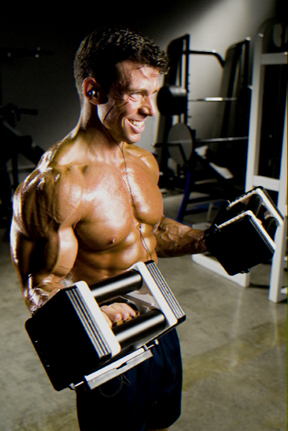
Jonathan doing dumbbell curls with Powerblocks

Readers of this newsletter sometimes send me research articles on topics I’ve discussed.

One who is always on the money is astute reader Steve (no relation to me, Reeves, or McQueen). His recent toss to me was by neurophysiologist Chad Waterbury, and it has to do with Speed Sets—fast reps… [Read more…]

Filed Under: X Files Tagged With: Chad Waterbury, neurophysiology, rep speed, rep tempo, speed sets

Slow vs. Fast for Mass

Jonathan doing barbell curls

Q: I recently saw where one of the researchers you quote often, Chris Beardsley, said that slow lowering on reps enhances hypertrophy. He suggested that it’s from extra mechanical tension. Your application of Speed Sets has me confused. Should I stick with a normal three-second negative on reps or use your Speed tempo [1.5-second reps]? [Read more…]

Filed Under: X Files Tagged With: Chris Beardsley, fast reps, slow negatives, slow reps, speed reps, speed sets

Damage Control, Muscle Mass, and Mentzer
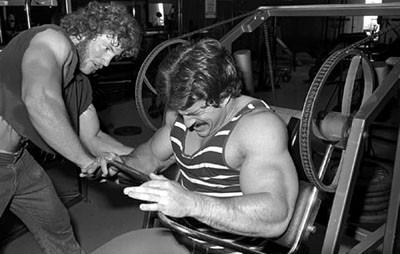
Mike Mentzer doing a forced rep on a Nautilus pullover machine

Yesterday I mentioned Mike Mentzer’s training style. While he tended to use a fast Speed Set tempo on his sets, despite saying otherwise, he often ended sets with slow forced reps and pure negatives… [Read more…]

Filed Under: X Files Tagged With: anabolic drugs, forced reps, garbage negatives, mass building, mike mentzer, muscle building, muscular damage, pure negatives, speed sets

  • « Previous Page
  • 1
  • 2
  • 3
  • 4
  • Next Page »

:: Get the latest news and specials :: Sign Up for our Ezine!

Shopping Cart

Number of items in cart: 0

  • Your cart is empty.
  • Total: $0.00
  • Checkout

Log In

Copyright © 2026 · X-Rep.com